
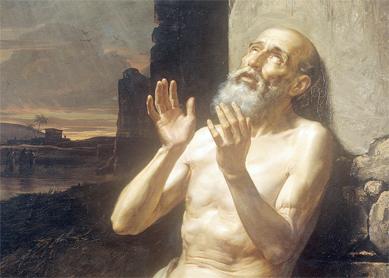
Scripture speaks of suffering not as a punishment or failure, but as a profound mystery woven into the fabric of spiritual life. From Genesis to Revelation, suffering is portrayed as something that can refine the soul, deepen faith, and draw one closer to God. Paul writes in Romans 5:3–4 that “we glory in our sufferings, because we know that suffering produces perseverance; perseverance, character; and character, hope.” James echoes this in James 1:2–4, urging believers to “consider it pure joy… whenever you face trials… because you know that the testing of your faith produces perseverance.”
The life of Christ is the clearest lens through which suffering is reinterpreted. Isaiah 53:3–5 describes the “Suffering Servant” as “despised and rejected… a man of sorrows,” whose wounds bring healing. This prophecy finds its fulfillment in Jesus, who willingly embraces pain and death not only to redeem humanity but to dignify suffering itself. In 1 Peter 2:21, believers are reminded that “Christ suffered for you, leaving you an example, that you should follow in his steps.”
Scripture also offers comfort in suffering. Paul, in 2 Corinthians 1:3–4, describes God as “the Father of compassion and the God of all comfort, who comforts us in all our troubles, so that we can comfort those in any trouble.” This idea of shared suffering becomes a form of sacred solidarity, a way to participate in divine compassion. Hebrews 4:15 reminds us that Christ is a high priest who “sympathizes with our weaknesses,” having experienced them himself.
Finally, suffering is never the end of the story. Romans 8:18 assures us that “our present sufferings are not worth comparing with the glory that will be revealed in us,” and Revelation 21:4 promises a future where “He will wipe every tear from their eyes. There will be no more death or mourning or crying or pain.”
Catholic teaching on redemptive suffering—the idea that human suffering, when united with Christ’s, can participate in the salvation of souls—is deeply rooted in Scripture. While the term itself is theological, not biblical, the concept flows directly from the life, death, and teachings of Christ and the apostles.
At the heart of this doctrine is Colossians 1:24, where Paul writes:
Now I rejoice in my sufferings for your sake, and in my flesh I complete what is lacking in Christ’s afflictions for the sake of his body, that is, the church,
This verse is pivotal. Paul isn’t suggesting Christ’s sacrifice was insufficient—rather, he’s affirming that believers are invited to participate in Christ’s redemptive work through their own sufferings, offered in union with Him.
The foundation is laid in Romans 8:17, which says:
and if children, then heirs, heirs of God and fellow heirs with Christ, provided we suffer with him in order that we may also be glorified with him.
This echoes the Catholic understanding that suffering is not merely to be endured, but can be transformed into a means of grace when united with Christ.
In 2 Corinthians 4:10, Paul writes:
always carrying in the body the death of Jesus, so that the life of Jesus may also be manifested in our bodies.
This reflects the mystical union between Christ and the believer—where suffering becomes a living participation in the Paschal Mystery.
The Gospels also support this theology. Jesus says in Luke 9:23:
And he said to all, “If any man would come after me, let him deny himself and take up his cross daily and follow me.
This isn’t just metaphorical—it’s a call to embrace suffering as a path of discipleship and spiritual fruitfulness.
Catholic tradition builds on these verses to teach that suffering, when freely accepted and offered in love, can be a form of intercessory prayer, a means of reparation, and a way to grow in holiness. Saints like Thérèse of Lisieux and John Paul II emphasized this, not as glorification of pain, but as a profound mystery of love and union with Christ.
This article was written with the assistance of artificial intelligence.

One response to “What Does Scripture Say About Suffering?”
I needed to see this today. God bless you and Thanks, Lisa. Reblogged!
LikeLike